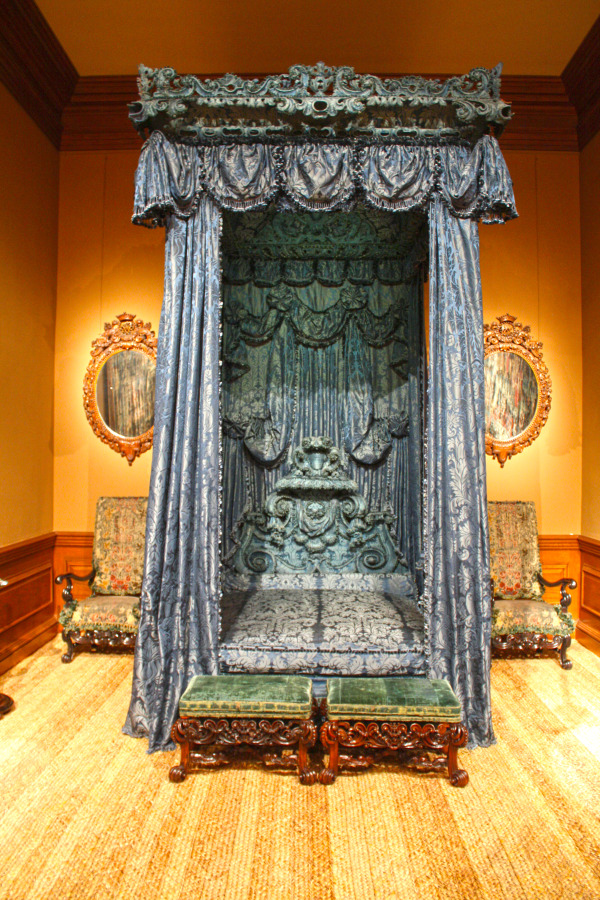
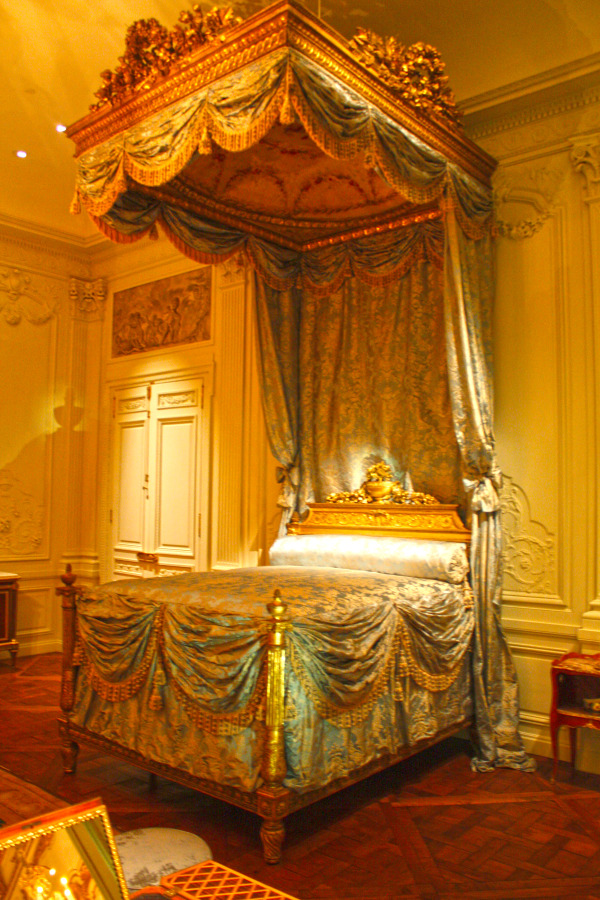
I’ve visited the Metropolitan Museum of Art many times over the past 40 years that I have visited museums. It is my favorite. In particular I enjoy visiting the period rooms. Below are some photos with descriptions of the rooms.
The Greek Revival Parlor, ca. 1835 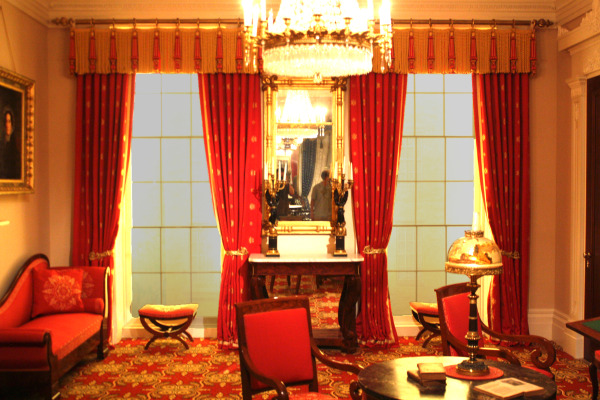
Installed in 1983, the Robert and Gloria Manney Greek Revival parlor is a re-creation that suggests how the formal front parlor in a fashionable New York City townhouse of about 1835 might have looked. The room was designed to showcase a rare suite of furniture made by Duncan Phyfe for the New York lawyer Samuel A. Foote. Among the only period elements in the room are an Ionic columnar screen at the entrance and a black marble mantelpiece from Halstead, a Greek Revival house in Rye, New York. The rest of the room was either patterned after existing parlors or based on designs found in some of the most popular architectural books of the day.
The 1837 suite of furniture—couches, stools, benches, and side chairs—is an example of the late work of Phyfe and his workshop. It was made to furnish a town house at 678 Broadway, into which Samuel Foote moved his family in 1837. These pieces feature luxuriously curving forms that highlight the beauty of their gleaming mahogany surfaces, and a true quality of design.
The Renaissance Revival Parlor, 1868–70 (Meriden, Connecticut)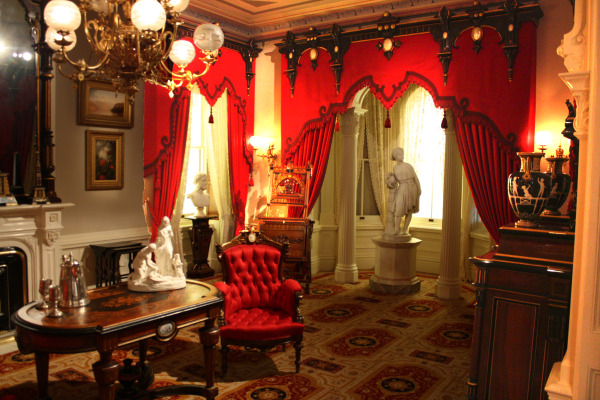
The Renaissance Revival Parlor originated on the handsome estate of Jedediah Wilcox, built between 1868 and 1870. Valued at the time at the significant sum of $125,000, the house was constructed in the Second Empire style, which was thought to indicate affluence and authority, as well as a cosmopolitan outlook. The Wilcox house was slated for demolition in 1968, and the Museum was able to acquire the front parlor, the rear parlor, and the formal front hall, including the magnificent staircase, as well as the rear parlor’s suite of furniture. Together they represent the first known instance of a nineteenth-century American designer, Augustus Truesdell, overseeing and maintaining a consistent idea throughout every aspect of a home’s decoration.
This installation re-creates the rear parlor, complete with an elegant suite of furniture and a matching over mantel mirror, window cornices, lighting fixtures, and marble mantel. While today this style is generally called Renaissance Revival, the furniture makers of its day believed they were following French models and reinterpreting designs fashionable during the reign of Louis XVI. The room’s beautifully painted ceiling features rosettes with trompe-l’oeil floral bouquets, all accurately copied from the original parlor. The dramatic twelve-armed chandelier, produced by New York City lighting firm Mitchell, Vance, and Company, picks up aspects of the design motifs found throughout the room.
The Haverhill Room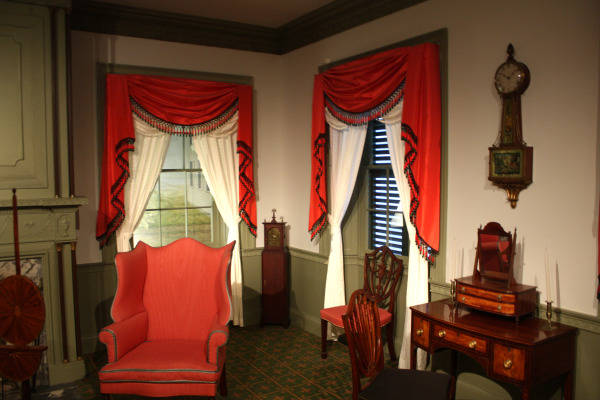
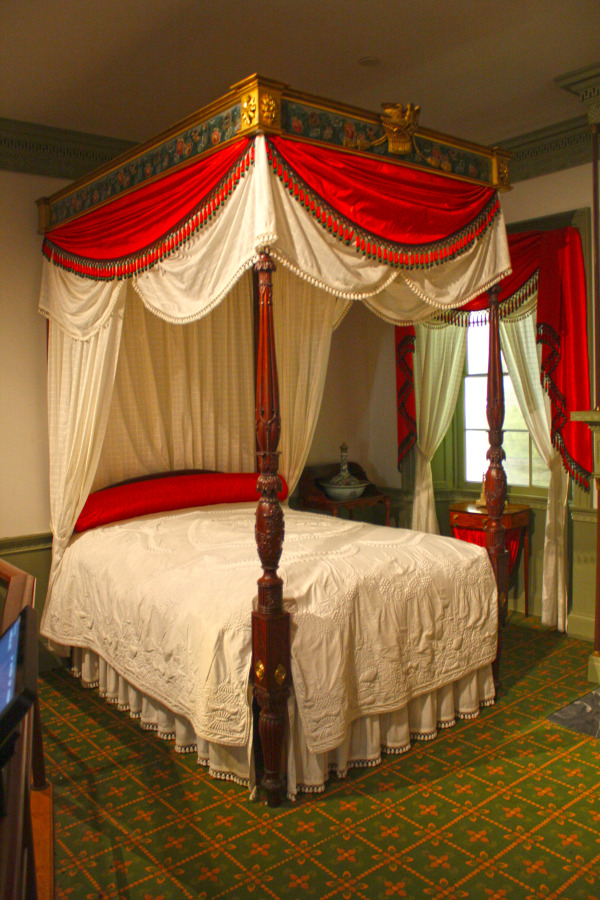
The Haverhill room comes from a house built around 1805 by the merchant James Duncan Jr. (1756–1822) and his wife Rebekah (1754–1838). Duncan’s family ran a successful business that included shipping, distilleries, real estate, and a chain of stores along the Merrimack River from Massachusetts into New Hampshire.
Although originally created as a formal parlor, the room is shown here as a bedroom in order to display a remarkable bed of the same period. The bed’s frame is attributed to the workshop of the great Boston cabinetmaker Thomas Seymour, the unusual gilded-and-painted cornices to frame maker John Doggett and decorative painter John Penniman. The beauty of the furniture is further enhanced by the delicate detailing in the room. The mantelpiece, with its elegant detached columns and urns, and the lacey molding that encircles the room typify the best of early Neoclassicism in America.
The Rococo Revival Parlor, ca. 1852 (Astoria, New York)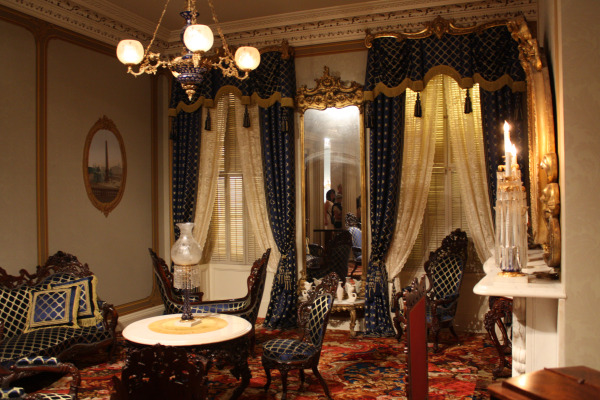
The florid architectural elements of the Museum’s Rococo Revival parlor were once part of an Italianate villa in Astoria, Queens, that overlooked the East River. The villa was built around 1852 by the New York businessman Horace Whittemore. The entire parlor is decorated in what would have been called the “French taste,” which was the accepted style for parlors during the mid-nineteenth century. Known today as “Rococo Revival,” the style is characterized by graceful, curvaceous forms, cabriole legs, dramatically grained woods, and deep, naturalistic carving.
The room showcases a splendid rosewood parlor suite attributed to the New York City cabinetmaker John Henry Belter, the foremost practitioner of the style. The furniture is somewhat grander than what the Whittemore family would have owned. In fact, the Museum’s suite is among the most ornate produced by Belter, and pieces of similar quality would have been found only in the homes of America’s wealthiest citizens. The robust design of the furniture is carried over in several other elements of the room, including the spectacular marble mantelpiece, the heavily patterned carpet, and the carved-wood door surround. A formal parlor of such elegance and richness would have been used by the lady of the house for entertaining.
Below are some great beds: